





At some point, most offices stop working as well as they once did. The team grows. The layout gets in the way. The space starts to feel like it belongs to a different version of the business.
The next question is usually the same: do we need a fitout or a renovation?
People use these terms as they mean the same thing. They do not. Getting this wrong early leads to the wrong contractor, the wrong budget and the wrong outcome.
This post breaks down the difference between office fitout and renovation. This is so you can go into that conversation with a builder or designer knowing exactly what you need.
What Is a Fitout?
An office fitout is the very process of preparing an empty or unfinished space for occupation. Think of bare concrete, exposed ceilings, no partitions. Everything gets installed from scratch. This also includes flooring, ceilings, partitions, electrical systems, lighting, data cabling, and furniture.
Three categories apply here:
- Base Building Fitout
Landlord delivered infrastructure covering base electrical, HVAC and core amenities.<
- Category A Fitout
Raised floors, suspended ceilings, basic mechanical and electrical services, and shared amenities.
- Category B Fitout
The tenant specific layer. Interiors, branding, workstations, meeting rooms and breakout areas all fall here.
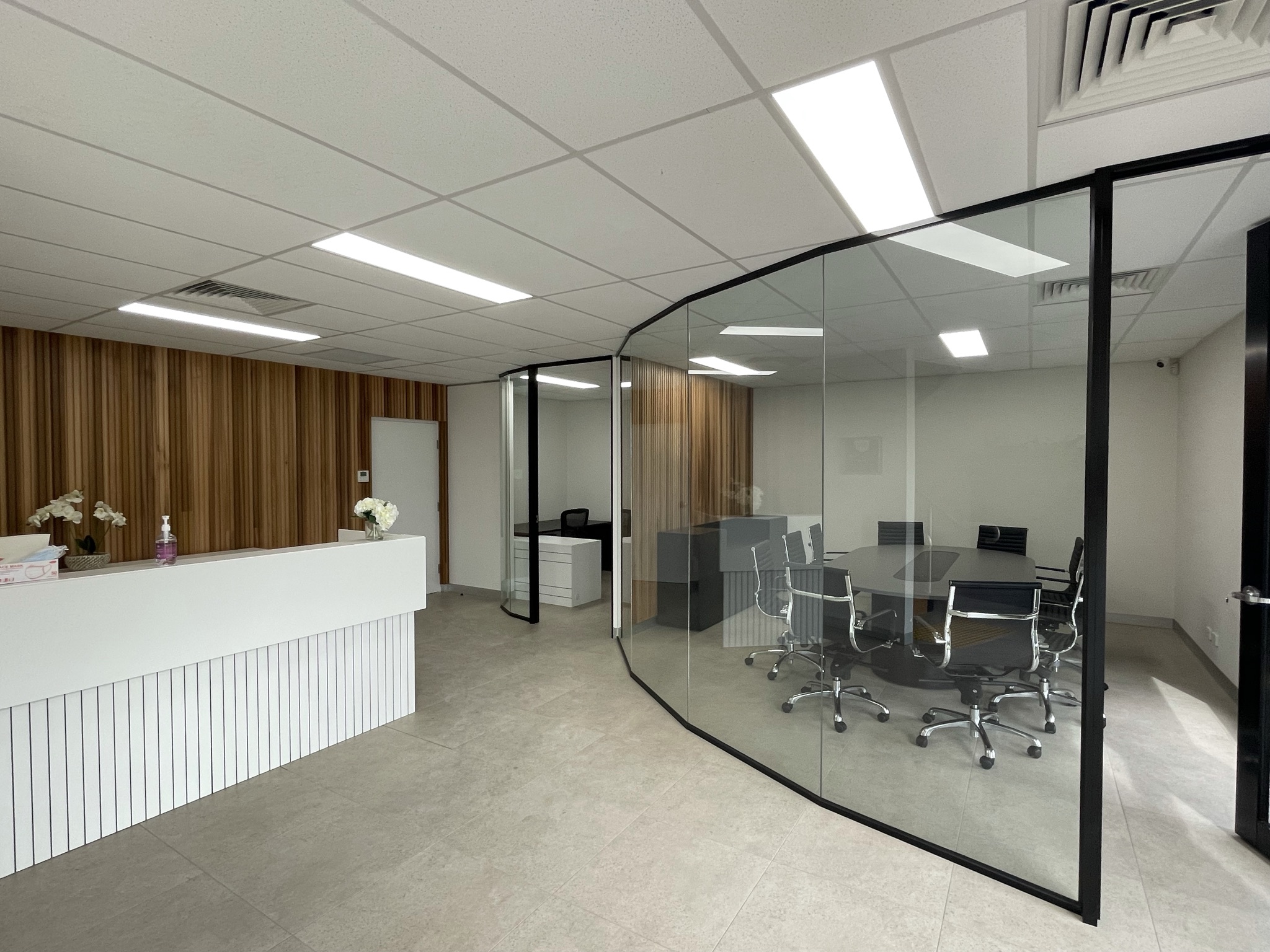
What Is a Renovation?
An office renovation works on a space that already functions as an office. The bones are there. What changes is what sits on top of them.
Common renovation work includes:
- Repainting and re-carpeting
- Replacing fixtures and fittings past their useful life
- Reconfiguring existing walls or partitions
- Updating bathroom or kitchen facilities
- Modernising lighting or electrical systems
In short, renovation improves what already exists. That is the ground-level office fitout vs office renovation/refurbishment distinction worth holding onto.
Office Fitout vs Office Renovation/Refurbishment: Key Differences
| Factor | Office Fitout | Office Renovation |
| Starting point | Empty or unfinished space | Existing occupied space |
| Scope | Full installation from base level | Updating or modifying existing elements |
| Typical trigger | New lease, relocation or new build | Ageing space, rebrand or team growth |
| Disruption level | Low, space is vacant | Medium to high, may need temporary relocation |
| Customisation | High, built to exact requirements | Moderate, limited by existing structure |
When Should You Choose an Office Fitout?
Some situations make the fitout path fairly obvious:
- The tenancy arrives in shell condition with no existing fit-out
- The current space has been stripped back and requires full reinstallation
- The layout needs to be purpose-built around your team size, workflow and brand
Considering a new office space? Speak to a fitout specialist before signing the lease. Contact Us Now
When Should You Choose an Office Renovation?
Renovation tends to make more sense when:
- The lease is ongoing and moving is off the table
- Only certain parts of the office are the problem, not the whole space
- A full fitout sits outside the current budget
There is a useful way to frame the difference between office fitout and renovation here. A renovation improves what is there. A fitout creates what is not.
Cost Comparison: Fitout vs Renovation
| Cost Factor | Office Fitout (Approx) | Office Renovation (Approx) |
| Average cost per sqm | $800 to $2,500+ | $300 to $1,200+ |
| Category A fitout | $500 to $1,000 per sqm | N/A |
| Category B fitout | $1,200 to $2,500+ per sqm | N/A |
| Minor cosmetic renovation | N/A | $300 to $600 per sqm |
| Major structural renovation | N/A | $800 to $1,200+ per sqm |
| Downtime cost | Lower, space is vacant | Higher, active office disruption |
Fitouts cost more upfront. That is the trade-off for having everything purpose-built from day one. Renovations come in cheaper initially but tend to need revisiting more often over time.
Which Option Is Right for Your Business?
Three questions tend to cut through the noise:
- Is space occupied? Vacant or new spaces call for a fitout. Active offices lean toward renovation.
- How much needs to change? A few underperforming areas point to renovation. A full layout overhaul points the other way.
- What triggered this decision? A new lease or significant team growth suits a fitout. An outdated aesthetic or isolated problem areas suit a renovation.
Unsure If You Need a Fitout or Renovation?
More businesses sit in this position than would admit it. The office fitout vs renovation call depends on your lease, the state of the current space and where the business is headed. A conversation with a commercial fitout specialist early on tends to save both time and money before anything is committed to.
Ready to Upgrade Your Workspace?
Premier Office Furniture supports Australian businesses across fitout and furniture supply. Be it new tenancies being set up from scratch or existing offices getting a considered refresh, we have a solution for all. If the difference between office fitout and renovation still feels unclear for your situation, the team is worth talking to before you lock anything in.


